Uncategorized

projects

May 13 in Uncategorized by Claudie Bustamante No Comments Read More


Black Women in History – Octavia Butler

February 20 in Uncategorized by Nourbese 1 Comment

“I just knew there were stories I wanted to tell” – Octavia Butler

Read More


What our Mothers Teach us about Health

February 25 in Uncategorized by admin No Comments

Much of what we know about health—reproductive or otherwise—we learn from our mothers, grandmothers, and aunties. Some messages have been helpful, and others have harmed more than they helped. Many Black girls are simply told by their mothers “not to get pregnant” as teenagers and young girls. While this advice is given with good intentions, it is often harmful because it doesn’t promote education about sexual health and safe sex. Instead, it paints a picture as sex only resulting in pregnancy and not potentially resulting in STI’s.

Another thing that we often learn in our households is unhealthy eating habits. We often are not raised in families that eat healthy or exercise regularly, and this is reflected in such health issues as diabetes and high cholesterol. Healthy habits and lifestyles start in the home, and we have to teach out children that healthy eating and exercise is the key to a long life and preventing life-threatening diseases.

Our mothers and grandmothers are who shape our views about reproductive health and healthy lifestyles, and it is no surprise that many parents who are obese also have obese children. The home is where we learn messages about health, sexuality, and reproductive choice. We need to start giving children all the information they need about protecting themselves and staying healthy in order to reverse the rates of obesity, disease, and teen pregnancy.

What lessons did you learn from the women in your family about health?

Read More


Thoughts on Venus Noir

February 25 in Uncategorized by admin No Comments

I and several members and friends of Black Women for Wellness spent three of the longest hours in my short life watching Venus Noir at the Pan African Film Festival on Friday evening. It was a mini fund raiser for the organization, and in that sense it was successful. We had a debrief, unpack and let it go discussion immediately following the movie right there in the movie theater and that was absolutely necessary. As the was really movie long, perhaps with the intent to drain one of energy, spirit and personal/community power. Perhaps the length of the movie was to drive home the point of her reality, which ever we were all devastated by these 3 hours, yet Ms Baartman’s life was this misery and even with her death the exploitation and humiliation continued.

Read More


Skin Deep in more ways than one

February 2 in Black Hair, Uncategorized by Nourbese No Comments

“We asked the owners and the stylists what were the products that they were using? And from those products what we did was create a list of the top 10 chemicals … and then looked at the impact of those chemicals – because they’re toxins – on our health and well-being. Anytime you look at any statistics for Black women, you’ll find that we are at the top,” said Robinson-Flint.

Read More


Reproductive Justice and Black Women

February 2 in Uncategorized by Nourbese No Comments

In a world where Black women are still dehumanized and black women’s bodies have been used to perfect contraceptives, reproductive justice becomes an issue of fighting for humanity and protecting our wombs. Reproductive justice is about challenging images and ideas that portray black women as unfit mothers. Who can forget the billboards proclaiming that the most dangerous place for a Black child is in the womb? As a whole reproductive justice isn’t about giving women the choice to become mothers, it is also about giving mothers the tools they need to care for their children.

Read More


This is my Black history not yours

February 1 in Uncategorized by Nourbese No Comments

Black history month is proof of America’s obsession with pacifist behavior. A sweet cyclic muse that we court each February, exploiting the notion that Black history is a subgenre of American history and therefore can be relegated to a month filled with partial truths — one short, concentrated heritage month spent divulging stories that have been diluted due to an overwhelming feeling of White guilt. This guilt urges historians to hide the truth and tell only those heroic tales of Blackness suitable for their grandchildren’s ears. This is not my Black history.

Read More


Pollution tied to disease risk in L.A. black women

January 24 in Uncategorized by Nourbese No Comments

Many times when we think of tackling diabetes and obesity in the Black community, we automatically look at diet and exercise. However there has been research linking exposure to environmental toxins that lead to an increase risk of diabetes. Below is a report released on Reuters about pollutions effect on Los Angeles Black women.

Read More


BWW’s Executive Director – Liberty Hill’s 2012 Leader to watch

January 21 in Uncategorized by Nourbese No Comments

Black Women for Wellness is honored and delighted that our Executive Director Jan Robinson Flint was chosen as a leader to watch. Check out the video with Jan and the one below with the other leaders esteem and inspirational leaders.

Read More


Befuddled and Disappointed with Obama Administration stance on Plan B

December 8 in Uncategorized by Nourbese No Comments

Black Women for Wellness is shaking our head truly befuddled by the Kathryn Sebelius decision today placing politics over science. The director of HHS has thrown young women under the bus of the continuously rolling agenda of conservatives, despite clear indications from the Food & Drug Administration of the safety of Plan B.

Read More


Day two – membership drive

December 6 in Uncategorized by Nourbese No Comments

Make 2 Phone Calls
Call your good friend, facebook friend, consistent followers on facebook – eating buddies, exercise workout crew – at least two of them to share with them the good news about Black Women for Wellness and encourage them to purchase a Black Women for Wellness membership.

Read More


Black Women for Wellness – 10 Day Challenge

December 6 in Uncategorized by Nourbese No Comments

Black Women for Wellness is in a fund raising mode: here is our 10 day challenge for you – each day we will ask you to take an action, make two phone call and share this challenge

Read More


Victims speak out about North Carolina sterilization program, which targeted women, young girls and blacks

November 10 in Uncategorized by Nourbese No Comments

iddick’s records reveal that a five-person state eugenics board in Raleigh had approved a recommendation that she be sterilized. The records label Riddick as “feebleminded” and “promiscuous.” They said her schoolwork was poor and that she “does not get along well with others.”

“I was raped by a perpetrator [who was never charged] and then I was raped by the state of North Carolina. They took something from me both times,” she said. “The state of North Carolina, they took something so dearly from me, something that was God given.”

Read More


End to HIV/AIDS – America’s Promise – Statement from Sec. of State Clinton

November 9 in Uncategorized by Nourbese No Comments

Secretary of State Hillary Rodham Clinton
Remarks on an AIDS-Free Generation
Washington, D.C.

Thank you, Francis, for that introduction—and Tony for those inspiring opening remarks.  It’s not easy to follow one of the top 20 federal employees of all time.  Government Executive magazine got it right.  That’s a richly deserved recognition, Tony.

It is an honor to be here with all of you today—in a room filled with some of America’s best scientists and most passionate advocates, true global health heroes, in an institution that is on the front lines of the fight against HIV/AIDS.  I especially want to recognize Ambassador Eric Goosby, our Global AIDS Coordinator, and his predecessor, Mark Dybul; Lois Quam, the executive director of our Global Health Initiative; Tom Frieden from the Centers for Disease Control and Prevention; and UNAIDS Executive Director Michel Sidibe.  Thank you all for your service and leadership.

I also want to acknowledge two people who could not be with us:  First, USAID Administrator Raj Shah, who has had such a positive impact on our health and development work.  And, second, I am delighted to announce our new Special Envoy for Global AIDS Awareness:  Ellen DeGeneres.  Ellen will bring her sharp wit and big heart—and her impressive TV audience and 8 million followers on Twitter—to raising awareness and support for this effort.  I know we can look forward to many wonderful contributions from Ellen and her loyal fans.

The fight against AIDS began three decades ago.  In June 1981, American scientists reported the first evidence of a mysterious new disease.  It was killing young men by leaving them vulnerable to rare forms of pneumonia, cancer, and other health problems.  At first, doctors knew virtually nothing about this disease.  Today, 30 years later, we know a great deal.

We know, of course, about its horrific impact.  AIDS has killed 30 million people around the world and 34 million people are living with HIV today.  In sub-Saharan Africa—where 60 percent of the people with HIV are women and girls—it left a generation of children to grow up without mothers, fathers, or teachers.  In some communities, the only growth industry was the funeral business.

Thirty years later, we also know a great deal about the virus itself.  We understand how it is spread… how it constantly mutates in the body… how it hides from the immune system.  And we have turned this knowledge to our advantage—developing ingenious ways to prevent its transmission, and dozens of drugs that keep millions of people alive.  AIDS is still an incurable disease, but it no longer has to be a death sentence.

Finally, after thirty years, we know a great deal about ourselves.  The worst plague of our lifetime brought out the best in humanity.  Around the world, governments, businesses, faith communities, activists, and individuals from every walk of life have come together, giving their time and money—along with their heads and hearts—to fight AIDS.

Although the past thirty years have been a remarkable journey, we still have a long, hard road ahead of us.  But today, thanks both to new knowledge and to new ways of applying it, we have the chance to give new lives and new futures not only to millions of people who are alive today, but also to an entire generation yet to be born.  Today, I would like to talk about how we arrived at this historic moment and what the world can and must do to defeat AIDS.

From its earliest days, the fight against HIV/AIDS has been a global effort.  But in the story of this fight, America’s name comes up again and again.

In the past few weeks, I’ve spoken about various aspects of American leadership, from creating economic opportunity to preserving peace and standing up for democracy.  Our efforts in global health are another pillar of our leadership.  They advance our national interests, making other countries more stable and the United States more secure.  They’re an expression of our values—of who we are as a people.  And they generate enormous goodwill.

At a time when people are raising questions about America’s role in the world, our leadership in global health reminds them who we are and what we do.  We are the nation that has done more than any other country to save the lives of millions of people beyond our borders.

Our efforts begin with the American public: from people living with the disease, to researchers in academic medical centers, to individual donors, to businesses and foundations. Philanthropies like the Clinton Foundation, which has helped make treatment more affordable by supporting innovative ways to manufacture and purchase drugs, and the Bill & Melinda Gates Foundation, which has underwritten breakthrough research.

But no institution in the world has done more than the U.S. government.  We have produced a track record of excellence in science.  Researchers here at the NIH conducted pivotal research that identified HIV and proved that it causes AIDS.  The first drug to treat AIDS was supported by the United States.  Today we are making major investments in the search for a vaccine; for tools like microbicides, which give women the power to protect themselves; and for other lifesaving innovations.

Alongside our research and development work, the United States has led a global effort to bring these advances to bear in saving lives.  When my husband was president, he appointed America’s first AIDS czar and more than tripled U.S. investments in preventing and treating AIDS worldwide.  And in 2003, with strong bipartisan support from Congress, President Bush made the momentous decision to launch the President’s Emergency Plan for AIDS Relief, or PEPFAR.

At the time, only 50,000 people in sub-Saharan Africa were receiving the anti-retroviral drugs that would keep them alive.  Now more than 5 million do, along with more than a million people in other regions.  And the vast majority receive drugs financed by either PEPFAR or the Global Fund to Fight AIDS, Tuberculosis, and Malaria—which the United States helped create.

And PEPFAR is having an impact far beyond AIDS.  It has expanded on the World Health Organization’s efforts to treat and prevent tuberculosis, which is the leading cause of death among people with AIDS.  PEPFAR has also helped build new facilities throughout our partner countries that see patients not just for HIV/AIDS but for malaria, for immunizations, and much more.  To staff these clinics, we helped train a new cadre of professional health workers, who are making their countries more self-sufficient.  In some countries, the same trucks that deliver AIDS medicine now also deliver bed nets to prevent malaria.  For all these reasons, PEPFAR is one of the platforms upon which the Obama Administration built our Global Health Initiative, which supports one-stop clinics offering an array of health services while driving down costs, driving up impact, and saving more lives.

I say all of this because I want the American people to understand the irreplaceable role the United States has played in the fight against HIV/AIDS—and the need to keep going.

To be sure, we have done it in an ever-expanding partnership with other governments, multilateral institutions, implementing organizations, the private sector, and civil-society groups—especially those led by people living with the virus.  But the world couldn’t have come this far without us, and it won’t defeat AIDS without us.

What’s more, our efforts have helped set the stage for the historic opportunity the world has today: to change the course of this pandemic and usher in an AIDS-free generation.

By an AIDS-free generation, I mean one where, first, virtually no children are born with the virus; second, as these children become teenagers and adults, they are at far lower risk of becoming infected than they would be today, thanks to a wide range of prevention tools; and third, if they do acquire HIV, they have access to treatment that helps prevent them from developing AIDS and passing the virus on to others.

HIV may be with us well into the future.  But the disease that it causes need not be.

This is an ambitious goal, and I recognize that I am not the first person to envision it.  But creating an AIDS-free generation has never been a policy priority for the United States government—until today.

This goal would have been unimaginable just a few years ago.  Yet it is possible, because of scientific advances largely funded by the United States and new practices put in place by this administration and our many partners around the world.  While the finish line is not yet in sight, we know we can get there, because we know the route we need to take.

It requires all of us to put a variety of scientifically proven prevention tools to work in concert with each other.  Just as doctors talk about combination treatment—prescribing more than one drug at a time—we all must step up our use of combination prevention.
America’s combination-prevention strategy focuses on a set of interventions that have been proven most effective:  ending mother-to-child transmission, expanding voluntary medical male circumcision, and scaling up treatment for people living with HIV/AIDS.

Of course, interventions like these can’t be successful in isolation.  They work best when combined with condoms, counseling and testing, and other effective interventions.  They rely on strong systems and personnel, including trained community health workers.  And they depend on institutional and social changes like ending stigma; reducing discrimination against women and girls; stopping gender-based violence and exploitation, which continue to put women and girls at higher risk of HIV infection; and repealing laws that make people criminals simply because of their sexual orientation.

Even as we recognize all these crucial elements, today I want to focus on three key interventions that can make it possible to achieve an AIDS-free generation.

First, preventing mother-to-child transmission.  Today, 1 in 7 new infections occurs when a mother passes the virus to her child.  We can get that number to virtually zero, while saving mothers’ lives too.

In June, I visited the Buguruni Health Center in Tanzania.  There I met a woman living with HIV who had recently given birth to a baby boy.  She had been coming to the clinic throughout her pregnancy for medication and information—because she wanted her boy to get a healthy start in life, and most especially, she wanted him to be born HIV-free.  When we met, she had just received the best news she could hope for:  Her son did not have the virus.  And thanks to the treatment she was getting there, she would live to see him grow up.

This is what American leadership and shared responsibility can accomplish for all mothers and children.  The world already has the necessary tools and knowledge; last year alone, PEPFAR helped prevent 114,000 babies from being born with HIV.

Now we have a way forward too: PEPFAR and UNAIDS have brought together key partners to launch a global plan for eliminating new infections among children by 2015.  And we continue to integrate prevention and treatment efforts with broader health programs, which not only prevents HIV infections, but also keeps children healthy and helps mothers give birth safely.

In addition to preventing mother-to-child transmission, an effective combination-prevention strategy has to include voluntary medical male circumcision.  In the past few years, research has proven that this low-cost procedure reduces the risk of female-to-male transmission by more than 60 percent—and the benefit is life-long.

Since 2007, some 1,000,000 men around the world have been circumcised for HIV prevention. Three fourths of these procedures have been funded by PEPFAR.  In Kenya and Tanzania alone, during special campaigns, clinicians perform more than 35,000 circumcisions a month.

In the fight against AIDS, the ideal intervention is one that prevents people from being infected in the first place.  The methods I’ve just described are two of the most cost-effective interventions we have, and we’re scaling them up.  But even once people do become HIV-positive, we can still make it far less likely that they’ll transmit the virus to others—by treating them with anti-retroviral drugs.  This is the third element of combination prevention that I want to discuss today.

Thanks to U.S. government-funded research published just a few months ago, we now know that if you treat a person living with HIV effectively, you reduce the risk of transmission to a partner by 96 percent.

Of course, not everyone takes the medication exactly as directed, and so some people may not get the maximum level of protection.  Even so, this new finding will have a profound impact on the fight against AIDS.  For years, some have feared that scaling up treatment would detract from prevention efforts.

Now we know beyond a doubt:  If we take a comprehensive view of our approach to the pandemic, treatment doesn’t take away from prevention.  It adds to it.  So let’s end the old debate over treatment versus prevention and embrace treatment as prevention.

There’s no question that scaling up treatment is expensive.  But thanks to lower costs of drugs, bulk purchasing, and simple changes like shipping medication by ground instead of air, we and our partners are reducing the cost of treatment.  In 2004, the cost to PEPFAR for providing ARVs and services to one patient averaged nearly $1,100 a year; today, it’s $335 and falling. Continuing to drive down these costs is a challenge for all of us—from donors and developing countries to institutions like the Global Fund.

Treating HIV-positive people before they become ill also has indirect economic benefits.  It allows them to work, support their families, and contribute to their communities; and it averts social costs, such as caring for orphans whose parents die of AIDS-related illnesses.  A study published just last month weighed the costs and benefits and found that—quote—“the economic benefits of treatment will substantially offset, and likely exceed, program costs within 10 years of investment.”  In other words, treating people will not only save lives—it will generate considerable economic returns too.

Now, some people have concerns about treatment as prevention.  They argue that many people transmit the virus to others shortly after they have acquired it themselves, but before they have begun treatment.

This is a legitimate concern, and we are studying ways to identify people sooner after transmission and help them avoid spreading the virus further.  But to make a big dent in this pandemic, we don’t need to be able to identify and treat everyone as soon as they’re HIV-positive.  In places where the pandemic is well established, as it is in most of sub-Saharan Africa, most transmissions come not from people who are newly infected, but from people with longstanding HIV infections who need treatment now or soon will.

We already have the tests we need to identify these people.  If they receive and maintain their treatment, their health will improve dramatically, and they will be far less likely to transmit the virus to their partners.

Let me be clear: None of the interventions I’ve described can create an AIDS-free generation by itself.  But used in combination with each other and with other powerful prevention methods, they present an extraordinary opportunity.  Right now, more people are becoming infected every year than are starting treatment.  We can reverse this trend.  Mathematical models show that scaling up combination prevention to realistic levels in high-prevalence countries would drive down the worldwide rate of new infections by at least 40 to 60 percent.  That’s on top of the 25 percent drop we’ve already seen in the past decade.

Read More


BWW goes to the White House

September 20 in Uncategorized by Nourbese No Comments

In just three days, a delegation of 18 Liberty Hill grantees, donor-activists and staff will meet with White House senior officials for a conversation about critical social justice issues — jobs, immigration, the environment, education and healthcare. Organized by the Courage Campaign, a Liberty Hill partner organization and grantee, we will join 100 others from California

Read More


Women’s Equality Day

August 27 in Uncategorized by Nourbese No Comments

Today, the US is one of only seven countries in the world that has not yet ratified the United Nations Convention on the Elimination of All Forms of Discrimination Against Women (CEDAW). One hundred eighty-seven countries have now ratified this international bill of rights for women, leaving the US in the company of Iran, Somalia, Sudan and three island countries in the South Pacific that have not yet done so. The United States is the only industrial and the only Western Hemisphere country that has not ratified CEDAW.

Read More


An Open Statement to the Fans of the Help by ABWH

August 16 in Uncategorized by Nourbese 1 Comment

Both versions of The Help also misrepresent African American speech and culture. Set in the South, the appropriate regional accent gives way to a child-like, over-exaggerated “black” dialect. In the film, for example, the primary character, Aibileen, reassures a young white child that, “You is smat, you is kind, you is important.” In the book, black women refer to the Lord as the “Law,” an irreverent depiction of black vernacular.

Read More


August and I have always had a unique relationship….

August 10 in Uncategorized by Nourbese No Comments

August & I have always had a unique relationship, it is my very favorite month, yet the month my life has experienced the most intense drama. August with its 31 days is often hot (like I like it), but can be relentless with daily heat and no let up, it is a month full of Black history (from all our various places in the diasporas) both of celebration and outrage.

Read More


Newsletter Signup

August 8 in Uncategorized by admin No Comments
Sign up and receive BWW newsletter!

* required

*

* * Newsletter by VerticalResponse

Read More


A Word From the Executive Director: Jan Robinson Flint

June 24 in Uncategorized by Nourbese No Comments

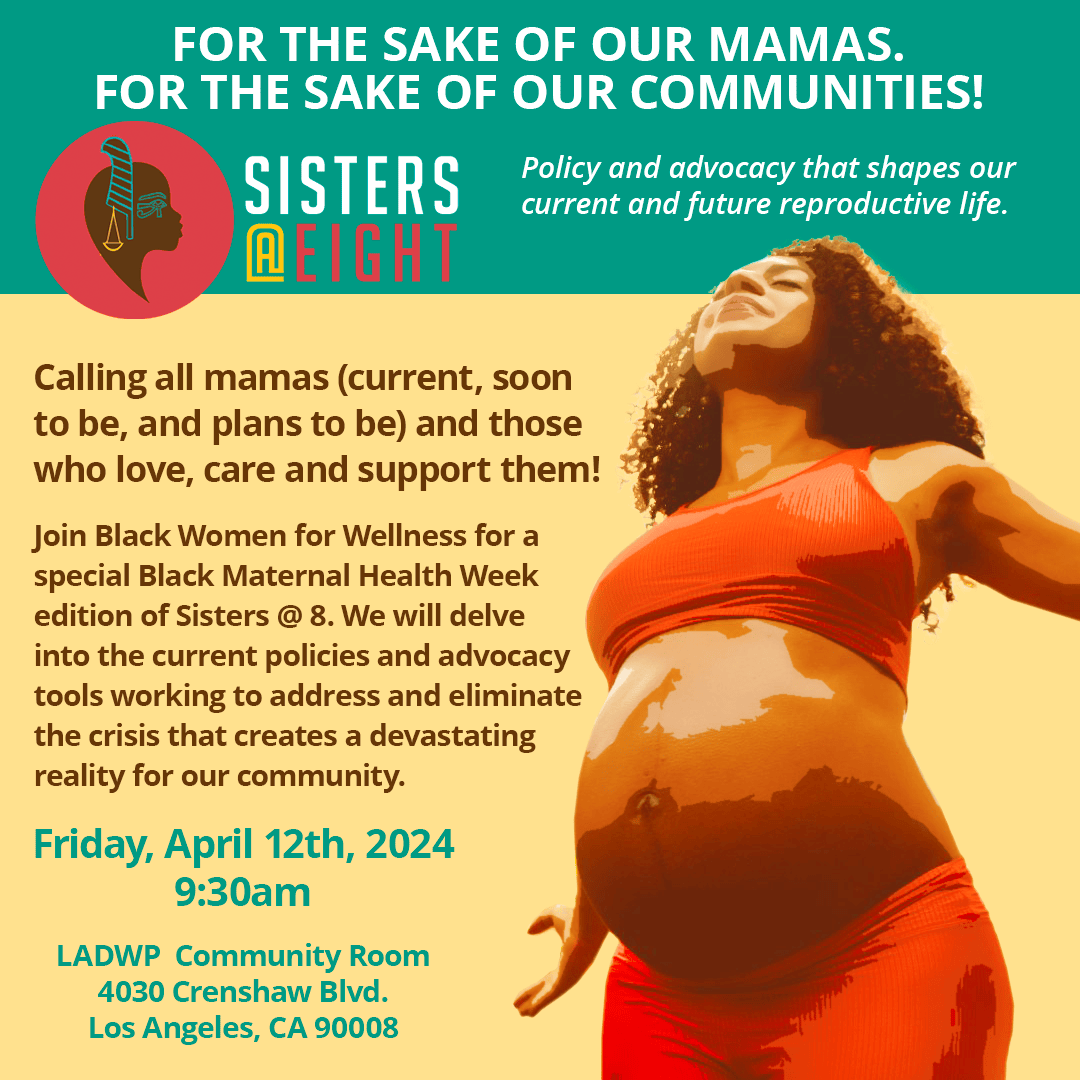
BWW is asking that we will all be prepared at Sisters@Eight to not only participate in conversation and discussion about our community issues, but also take action and organize around them. Sisters@Eight will still have our same timely and relevant issues, focused on the health and wellness of the Black Los Angeles community; now we’re counting on you to take action, keep up the conversation but turn this civic engagement into organized forces to speak truth to power, take action, advocate for community concerns and hold accountable our elected officials.

Read More


Congresswoman Barbara Lee Responds to Billboards that Attack a Woman’s Right to Choose

June 22 in Uncategorized by Nourbese No Comments

Oakland – Today, Congresswoman Barbara Lee (CA-09) issued the following statement denouncing the race-based attack on a woman’s right to choose that is being waged by the Radiance Foundation in coordination with the California-based Issues4Life:
“I am deeply offended by the race-based billboards that are being displayed in my congressional district by the Radiance Foundation and Issues4Life,” Congresswoman Lee said. “

Read More


Racist billboards come to Oakland. WTF.

June 17 in Uncategorized by Nourbese No Comments

I live in the Fruitvale, a mostly Latin@ neighborhood in Oakland. I love this city and fall in love with it every morning as I ride my bike down Foothill Boulevard toward downtown. I ride through mothers walking their children to school, day laborers waiting for gigs, the smell of tamales and carne asada, neighbors waiting for “the 40″ (the bus) and commuters fighting each other to move their cars ahead in traffic. This morning as I was pedaling fast to make the light at the intersection of Fruitvale and Foothill, I nearly lost my grip of my handlebars as I noticed a billboard at this busy intersection. It said “Black and beautiful” in big white letters with an image of a darling newborn child. Underneath it read “toomanyaborted.com.” I had to slow down and crank my neck to really see if it was true.

Read More


EPA, FDA plan to study role of nanomaterials

June 13 in Uncategorized by Nourbese No Comments

The Environmental Protection Agency said that it will seek to determine whether nanomaterials in pesticide products can “cause unreasonable adverse effects on the environment and human health.” And the Food and Drug Administration released draft guidelines to industries about when the use of nanomaterials might trigger regulatory interest. The FDA named certain characteristics — such as the size of nanomaterials used and their properties — that may be considered when trying to identify applications of nanotechnology in products.

Read More


Minimize the belly fat- Belly Fat Buster Foods

May 12 in Uncategorized by Nourbese No Comments

Summer is coming up fast, and most of us are taking another look at our new years resolution to get it right and get it tight. Below are a couple of products that help minimize the belly fat and

Read More


Basic Ingredients for Non-Toxic Cleaning

May 6 in Uncategorized by Nourbese No Comments

Is that time of year again, you know, the time most of us dread, the time for spring cleaning. While your cleaning up your home, Black Women for Wellness thought we would share our tips to keep you body from getting dirty with toxic chemicals. Below are some everyday items that pack a super clean punch. BWW is going vintage clean.

Read More


Healthy Recipe Idea!

April 22 in Uncategorized by Nourbese No Comments

It makes the perfect holder for so many fillings. Collards are very similar to Kale, but for me it has a slightly different flavor. I also like the size of collards. The size aids in its ability to wrap up so many things. Even greater, collard greens are high in fiber and filled with phytochemicals, which reduce your risk of cancer.

Read More


Breast Health Essentials: Tips for Breast Health

April 22 in Uncategorized by Nourbese No Comments

Breast Health Essentials! What do we need to know for better breast health? The key to breast health is early detection and knowing your screening guidelines…

Read More


Commentary: Why ThatsAbortion.com billboard is an Ad FAIL

February 28 in BWW blog, Uncategorized by Nourbese No Comments

An offensive, incendiary ad went up in Manhattan this week targeting the wombs of Black women. I was not alone in my anger at the ad; media personality and recording artist Free shared my upset. She invited me to provide some analysis on the ad to take the discussion on twitter beyond the emotional reactions the ad sparked. Below is what she posted at Freesworld.com. I’d love to get your thoughts here as well.

Read More


On the View- Hot Topic- Abortions, Black Women & Planned Parenthood

February 24 in BWW TV, Uncategorized by Nourbese No Comments

Check out the view’s Hot Topic today about the billboard in New York’s Soho neighborhood

Read More


Join Planned Parenthood Los Angeles , Rep. Judy Chu and Rep. Xavier Becerra to speak out in support of women’s health.

February 23 in Events, Uncategorized by Nourbese No Comments

Last week the U.S. House of Representatives passed the Pence bill to bar Planned Parenthood from receiving federal funds for any purpose, including providing basic primary and lifesaving preventive health care to women and families. Millions of Americans rely on Planned Parenthood for primary and preventive health care, including lifesaving breast and cervical cancer screenings, annual exams, family planning visits, birth control, HIV testing, and more. In Los Angeles alone, Planned Parenthood provides care to over 120,000 women, men and teens each year through 17 health centers.

Read More


OP-ED Executive Director of Black Women for Wellness

January 21 in Uncategorized by Nourbese No Comments

Black Women for Wellness joined with others nationally and locally this week to celebrate the birthday of Dr. Martin Luther King Jr., a holiday that marks an important milestones in our African American’s experience. While we are encouraged by the strides that have been made to unify and heal our communities, we must point out a racist and divisive campaign that objectifies Black children, charges Black women with genocide and utilizes Black men as pawns in a political play for power that has been brought to our city by The Radiance

Read More


March 5th Advocacy Training

January 8 in Events, Uncategorized by Nourbese No Comments

Ever wondered how a bill becomes a law or maybe you thought about speaking to a legislative representative or perhaps you have concerns for the way health laws are instituted. We all have personal and community concerns now is your opportunity to learn how to voice them! In preparation for a day of lobbying in Sacramento Black Women for Wellness and the Reproductive Justice Coalition of Los Angeles are organizing a half day advocacy training workshop.

Read More


Healthy Eating For Women

January 7 in FYI's, Uncategorized by admin 2 Comments

Both women and men need enough calcium to build peak (maximum) bone mass during their early years of life. Low calcium intake appears to be one important factor in the development of osteoporosis. Women have a greater risk than men of developing osteoporosis.

A condition in which progressive loss of bone mass occurs with aging, osteoporosis causes the bones to be more susceptible to fracture. If a woman has a high level of bone mass when her skeleton matures, this may modify her risk of developing osteoporosis.

Therefore, particularly during adolescence and early adulthood, women should increase their food sources of calcium. “The most important time to get a sufficient amount of calcium is while bone growth and consolidation are occurring, a period that continues until approximately age 30 to 35,” says Marilyn Stephenson, a registered dietitian with FDA’s Center for Food Safety and Applied Nutrition. “The idea is, if you can build a maximum peak of calcium deposits early on, this may delay fractures that occur later in life.”

The Recommended Dietary Allowance (RDA) for calcium for woman 19 to 24 is 1,200 mg per day. It drops to 800 milligrams for women 25 and older. “That is still a significant amount.” says Stephenson. “The need for good dietary sources of calcium continues throughout life,” she says.

Read More


Turning All Clients in Dream Clients

December 13 in Uncategorized by admin No Comments

Lorem ipsum dolor sit amet, consec tetuer adipiscing elit. Praesent vestibu lum mo lestie lacus. Aenean nonummy hendrerit mauris. Phasellus porta. Fusce suscipit varius um sociis natoque penatibus et magnis dis parturient montes. Suspendisse et tortor a mi mollis fringilla. Vestibulum eget tortor vitae ante gravida vestibulum. Praesent congue quam non enim volutpat aliquam.

Read More


What we live by

  • Until the lions have their historians, tales of the hunt shall always glorify the hunter.

    African Proverb, unknown author
  • For the past 33 years, I have looked in the mirror every morning and asked myself: ‘If today were the last day...

    Steve Jobs, Steve Jobs
  • If you don’t stand for something you will fall for anything

    Malcolm X, Malcolm X